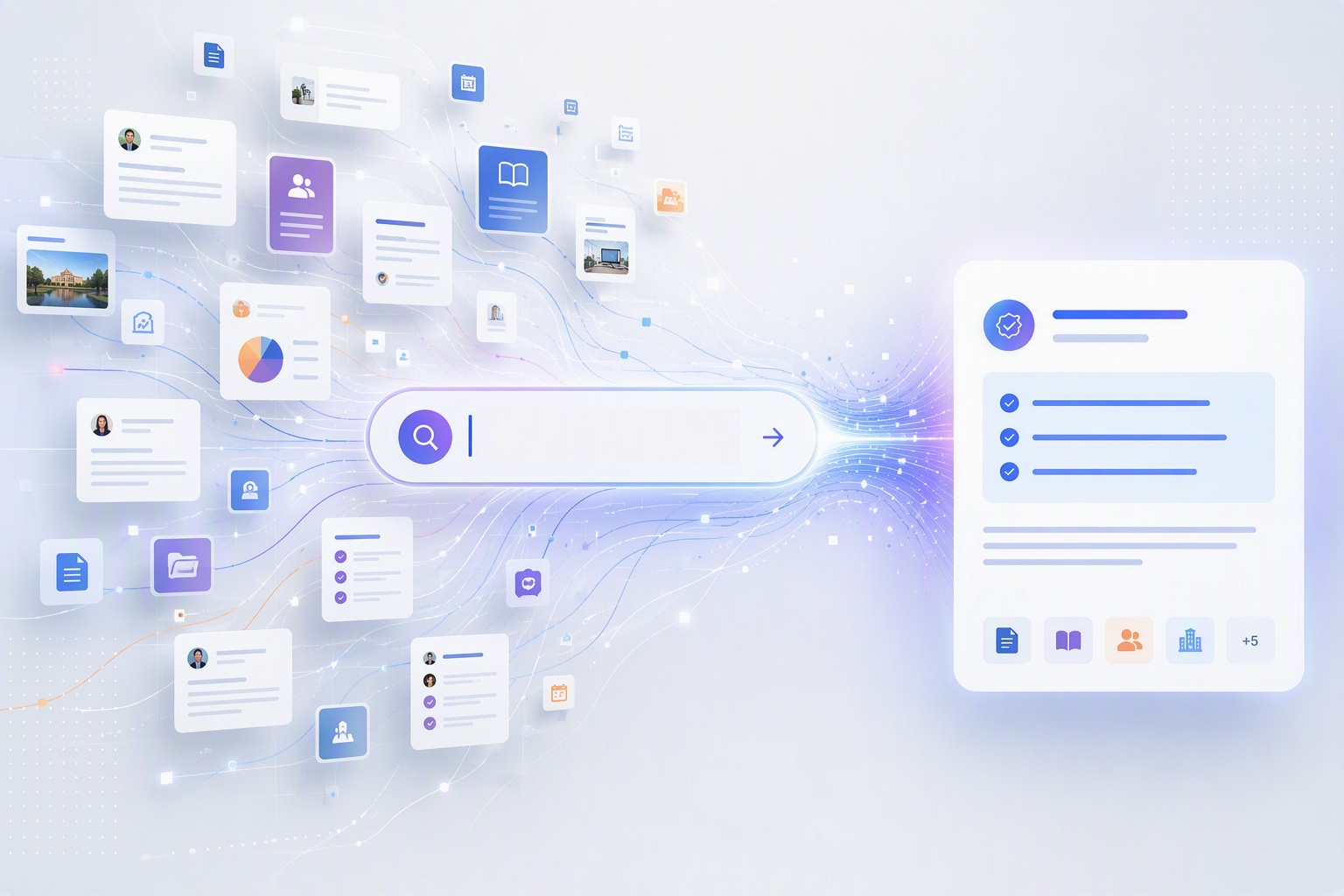
AI agents are moving from experiments to business processes. The real value is not created through deployment, but in how agents change the structure of work and how their impact is managed.

Most AI agent deployments fail because they are treated as tools and not as part of the business process.
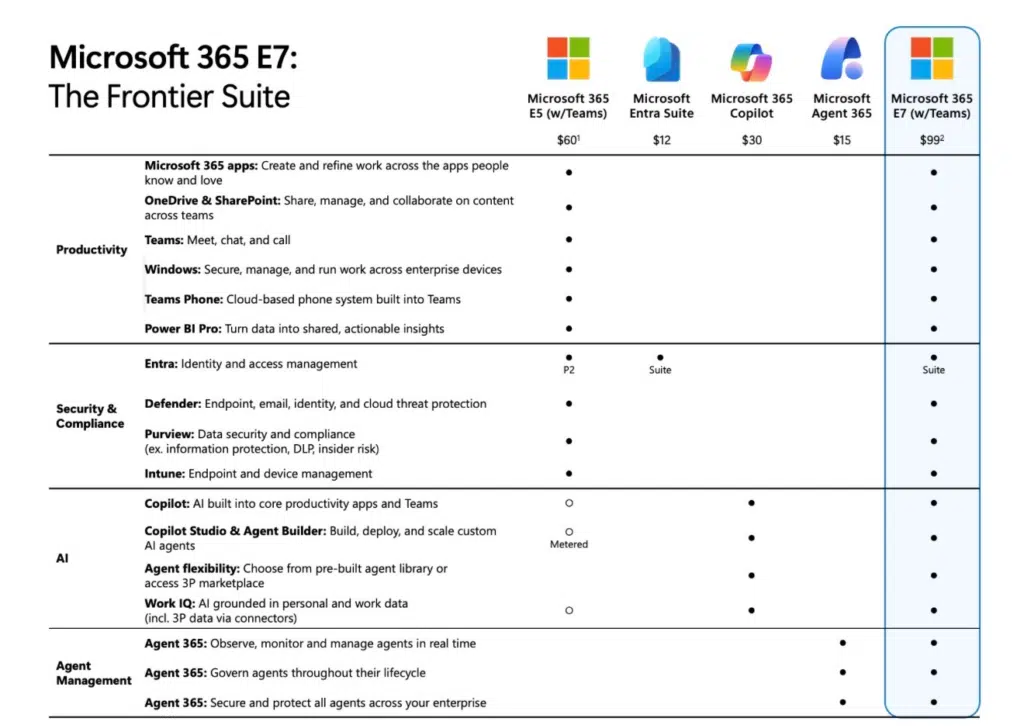
Microsoft has launched a new E7 license package, the Frontier Suite, which combines Microsoft 365, Copilot, AI agents, security, and management into a single package. It is not just a license extension, but a way to define an AI-driven work environment, where AI is not a separate add-on, but an integral part of the work itself.
For many organizations, the E5 license remains a sufficient option, and there is no immediate need to migrate. The direction of development is still clear: towards an environment where agents are a central part of the business processes.
Technology is evolving rapidly, but value is only created in processes
Previously, the user did the work, and the systems supported individual steps. The work progressed from application to application, and the responsibility for the whole remained with the person from start to finish.
Now the roles are clearly changing. The user guides and oversees, while agents process information, make interpretations, and take tasks forward across multiple steps without constant guidance.
Copilot supports the individual user, but the agent operates as part of the business process. The work shifts from doing to controlling, which also changes the ownership, responsibilities, and metrics of the processes.
Individual automation does not change the whole
AI is being trialed extensively in various organizations, but the benefits are often limited to individual use cases. Most deployments stall halfway. Experiments show potential, but the impact does not extend to the entire process or business.
The challenge is not the technology, but how value is defined and measured. A single automated step may seem effective, but the overall impact remains unclear if other steps in the process do not change at the same time.
Value is only created when the agent acts as part of the business process and processes unstructured information, such as emails or attachments. The agent not only transfers data but also interprets content, combines information from different systems, draws conclusions, and supports process control and exception handling.
Where agents deliver value – and where they don’t
The greatest benefit is in processes where tasks are repetitive and follow a certain structure, but still include steps that require interpretation. Agents work particularly well when the information being processed is not already structured, such as in emails, attachments, and free-form text, where traditional automation is not enough.
The benefits are highlighted in processes that include a lot of manual checking, data transfer, and sufficient volume. In this case, the impact is clearly visible in throughput times, quality, and costs.
If the operating model varies from case to case and there are no clear rules or context for decision-making, the benefit provided by the agent will be limited. The agent can interpret information but cannot tackle problems with data quality or process structure.
Case: agent as part of a process
Processes that process large amounts of unstructured information and where manual work slows down the whole process are typical applications for artificial intelligence agents.
Starting point
In many organizations, some customers send orders by email, even if a separate order channel is used. The messages are structured differently, and the information can be found in different parts of the message or in attachments. The billing and customer service team processes orders manually, which takes time and exposes them to errors, and shifts the focus of the work to routines.
Agent in action
An artificial intelligence agent recognizes the order from the email and connects it to the existing customer base. The content is analyzed using generative artificial intelligence, and the essential information is extracted into a structured format.
The agent creates a preliminary order, checks the logic of the data, and automatically processes missing information or directs the case for review. The process remains controlled using the human in the loop model, and the approved order moves forward without manual input.
Impact on daily work
Manual data entry is significantly reduced, work becomes faster, and processing times are reduced. The number of errors is reduced because processing is based on a unified logic rather than individual interpretations.
The nature of the work is changing. From routine tasks, we are moving to supervision and handling deviations and client-specific work, where the role of the expert is emphasized.
Without management, agents do not scale
A single agent is just the beginning, and an organization quickly creates multiple agents for different processes. The focus shifts from implementing individual solutions to managing the overall environment. How agents operate, their impact, and associated risks must be understood.
The organization must know what the agents do, what data they process, and how their actions affect the business. Visibility, responsibilities, and incident management become key requirements.
Lifecycle management and security take center stage when agents are developed, updated, and retired. It must be defined what data the agent can access, what it is allowed to do, and at what point human approval is necessary.
Without a management model, the number of agents increases, but their impact cannot be controlled. Therefore, alongside deployment, controlled further development is needed, where visibility, control, and security are part of a coherent whole.
Solutions offered by Microsoft, such as E7 Frontier Suite and Agent 365, bring agents together into a manageable environment where control, management, and security work as one.
Scaling is not possible without the right choices
The key issue is not the license, but the ability to identify the right use cases. Value is created from processes in which the agent reduces manual work, speeds up throughput, and improves quality in a controlled manner.
Progress is built in stages. The first use cases are selected from processes where the structure is clear and the benefit is measurable, so that the impact is visible quickly and the lessons learned can be transferred to wider use.
The transition is from experiments to managed deployment, where solutions are scaled as part of a coherent whole. Success depends on the ability to connect technology, processes, and people into a coherent whole where agents support the business in a consistent and measurable way.
Contact us, and we will help you identify where agents deliver value and how to deploy them in a managed manner in your Microsoft 365 environment.
Marko Koskela
Chief Commercial Officer, partner
Read more: